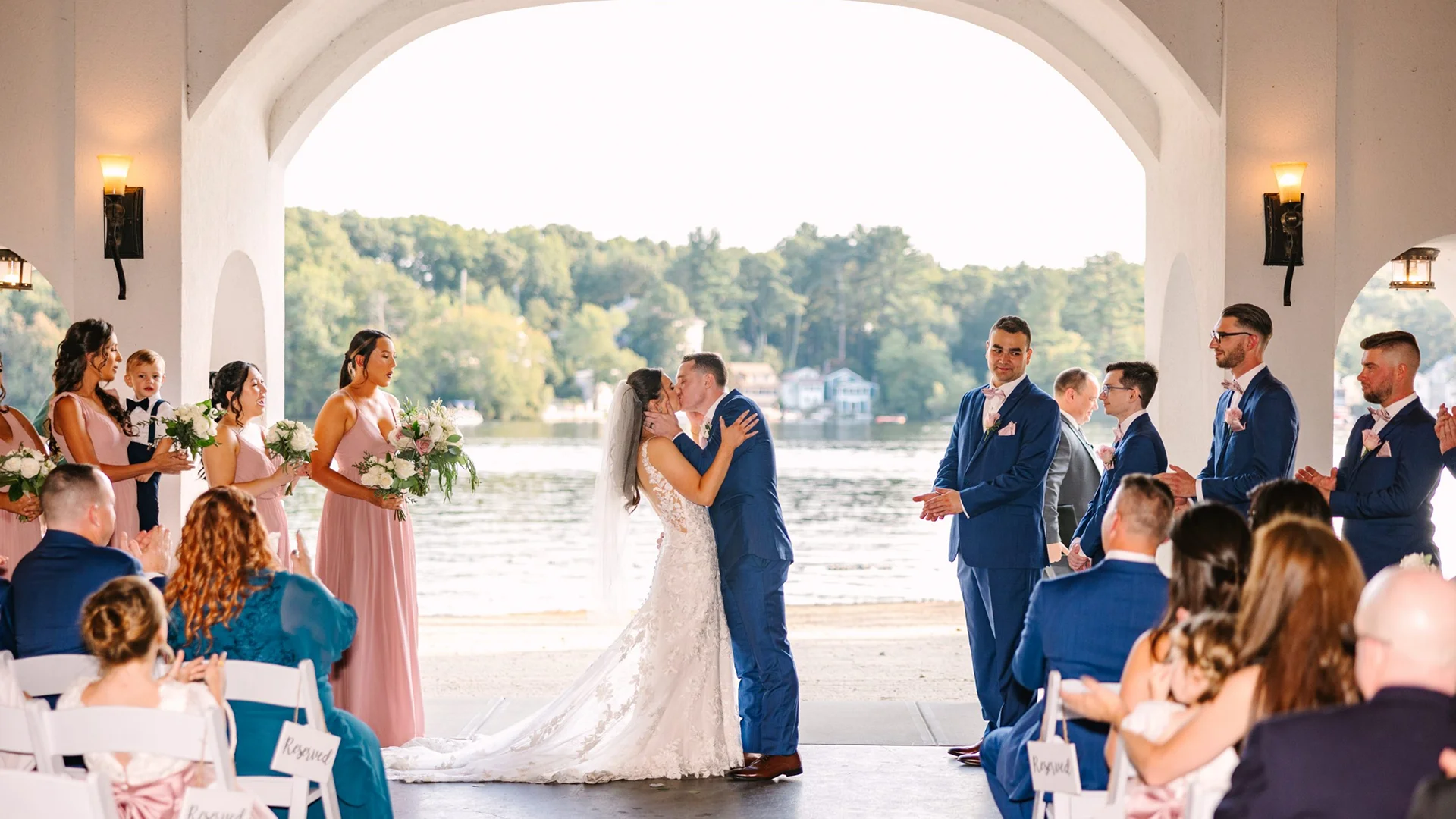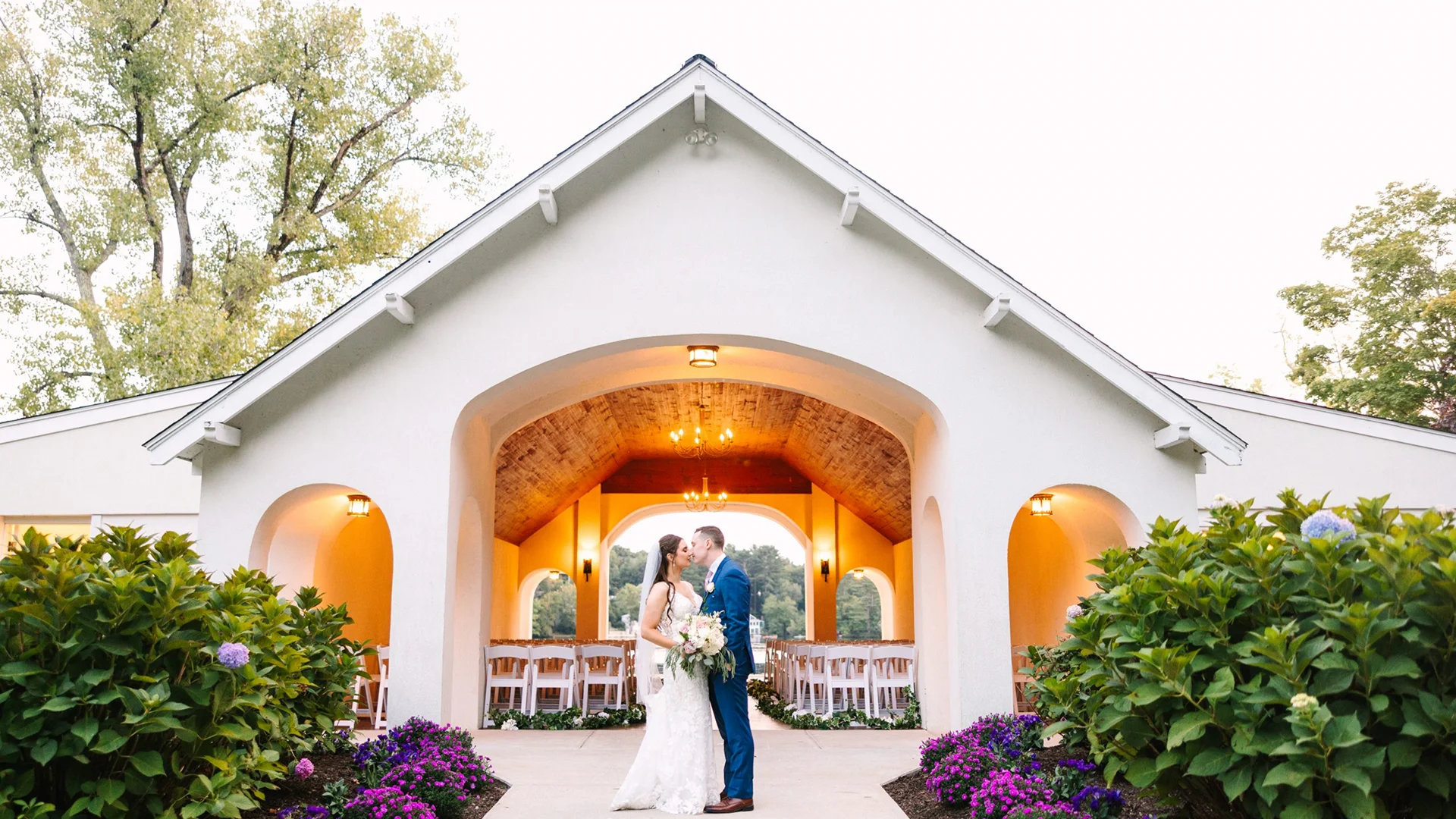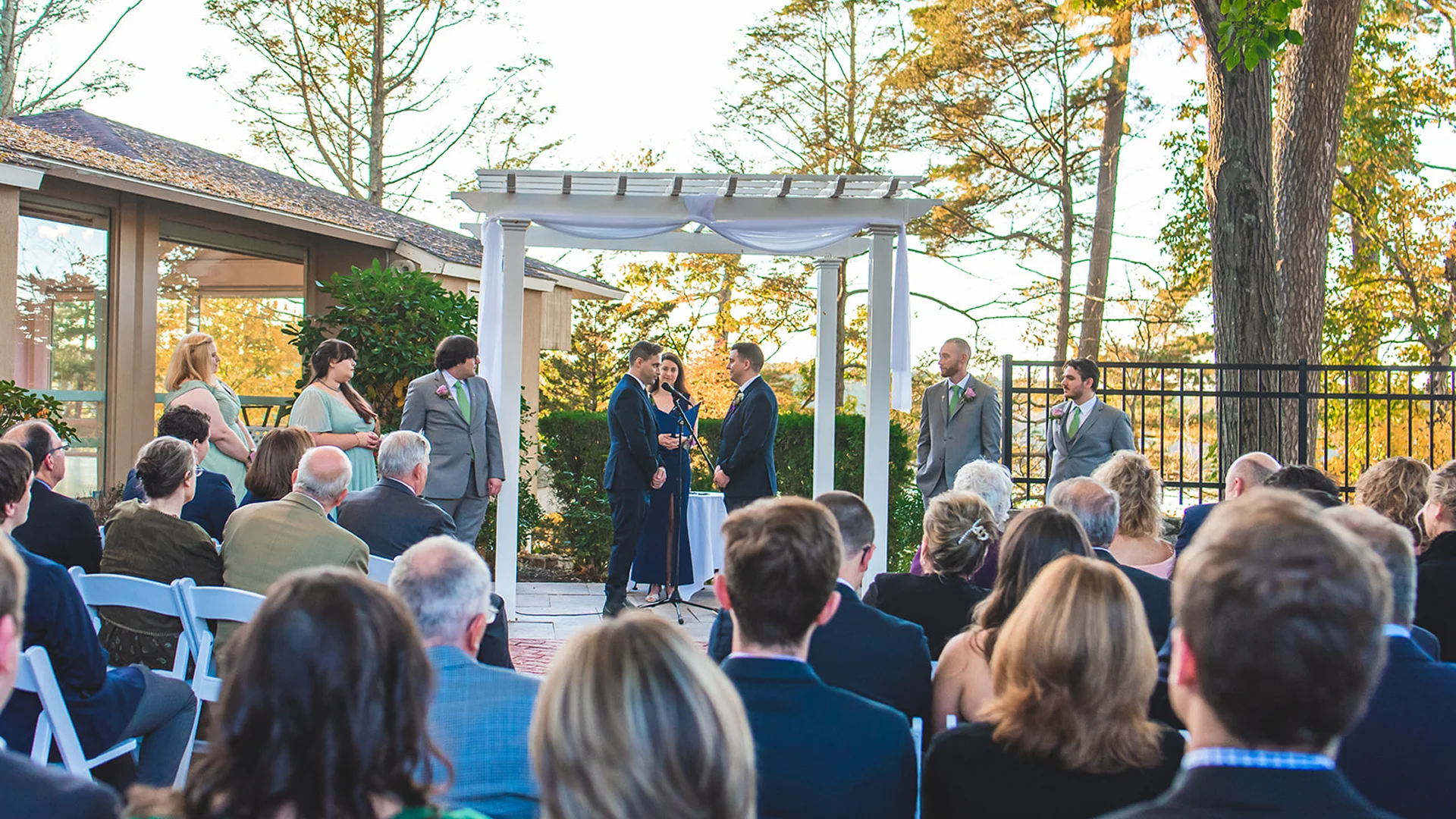
Every outdoor wedding venue in Massachusetts promises beautiful scenery. Most of them deliver on that promise, at least in the photos.
But scenery alone does not make a wedding day go smoothly. What separates a truly great outdoor venue from a merely pretty one comes down to five things — and most couples do not find out which category their venue falls into until the day itself.
This guide is about helping you see past the photos. We will walk through the five factors that matter most when evaluating outdoor wedding venues in Massachusetts, what good looks like for each one, and what to watch out for before you sign.
Worth knowing: Massachusetts hosts over 30,000 weddings per year. Outdoor venues account for a growing share of those bookings — and weather-related disruptions are the single most common complaint in post-wedding venue reviews across New England.
1. How the Venue Handles New England Weather
This is the factor that matters most, and it is the one couples spend the least time on during venue tours. They are distracted by the view and forget that Massachusetts weather has its own agenda.
September is the most popular month for outdoor weddings in New England. It is also the tail end of hurricane season. October brings cold snaps. June can turn rainy overnight. Even August — peak summer — has surprised couples with 90-degree heat waves that no amount of aesthetic planning can fix.
A great outdoor venue does not fight the weather. It has already built around it.
What this actually looks like at a strong venue:
- An indoor space that is genuinely beautiful — not just functional. If the rain backup is a bare conference room while the outdoor space is lakefront, that is not a backup. That is a downgrade.
- A decision timeline that works in your favor. The best venues give you until the morning of the wedding to make the call — not three days before, when forecasts are still uncertain.
- A seamless transition plan — meaning the venue can reset from outdoor ceremony to indoor reception without turning your cocktail hour into controlled chaos.
- Staff who have done this before. A team that has handled a September storm or an August heat wave will feel calm and capable. A team that has not will feel exactly as panicked as you are.
Good sign: The venue shows you the indoor backup space on your tour without you asking — and it looks as well-maintained and beautiful as the outdoor spaces.
Red flag: The indoor backup is described as available but you are never shown it, or the answer is vague: "We will figure something out." That is not a plan.
2. The Outdoor Ceremony Space — What the Photos Do Not Show
The ceremony is the moment you have been planning for months. The outdoor space it happens in deserves more scrutiny than a scroll through an Instagram gallery.
Photos are always taken at the best time of day, in the best light, with no guests in the way. What you need to evaluate is what the space actually feels like with 150 people in it, at your specific time of day, in your specific month.
The things you can only judge in person:
- Sun angle at ceremony time. Where is the sun at 4pm on a late September Saturday? Are guests staring directly into it? Is the officiant backlit in photos? This cannot be fixed with décor.
- Ambient noise. A beautiful lakeside trellis next to a road or a neighboring parking lot changes the feel of the ceremony entirely. Visit the venue during a weekend afternoon and listen.
- The sight lines. Every guest should be able to see the couple without craning. Walk the rows yourself — does the terrain slope at all, or is it completely flat with heads blocking the view?
- What the focal point actually is. The arch, the trellis, the shoreline — does it read as a clear focal point from the back row, or does it get lost in a busy background?
Worth knowing: Photographers consistently cite sun angle and background clutter as the two outdoor ceremony factors most likely to produce photos couples are disappointed with — neither of which shows up in venue marketing materials.
3. The Flow: How the Whole Day Actually Moves
An outdoor wedding is not just a ceremony in a field. It is a full day with a lot of moving pieces — guests arriving, cocktail hour, the transition to dinner, dancing, and a late-night exit. A great outdoor venue is designed for that flow. A weak one makes you feel it.
The best outdoor wedding venues in Massachusetts have a clear, intuitive path through the entire event. Guests should never feel confused about where they are supposed to be, and couples should never feel like they are managing logistics instead of enjoying the day.
Signs a venue has thought about flow:
- The ceremony space, cocktail area, and reception are distinct but connected — guests move through the property naturally, not back through a parking lot
- There is a private space for the couple and bridal party to get ready on-site, away from guests
- Vendors — florist, photographer, DJ — can set up without interfering with where guests will be arriving
- The timeline of the day has been done hundreds of times and the staff can talk you through it without hesitation
Good sign: The venue coordinator can walk you through an entire sample day timeline without looking at notes. That is a team that has done this enough times to know every detail.
4. Photography That Tells a Full Story
Here is something most couples do not think about when touring outdoor venues: your wedding album needs variety to feel like a narrative. If every photo is taken in the same spot with the same background, the album feels flat — even if every individual photo is beautiful.
The best outdoor wedding venues in Massachusetts give photographers multiple scenes to work with throughout the day. Not just one waterfront view, but a range of textures, elevations, and light conditions.
What to look for on the property:
- Water — a lake, a dock, a shoreline — for ceremony backdrop and couples portraits
- Wooded areas or garden paths for softer, shaded portrait moments
- Architecture — a historic structure, a boathouse, a barn — that adds warmth and texture
- Open sky spaces for wide, cinematic shots
- Indoor spaces with interesting light — chandeliers, floor-to-ceiling windows — for evening reception photos
Ask Before You Tour
Before visiting any outdoor venue in Massachusetts, email your photographer and ask: "Have you shot at this venue? What is your honest take on the photo variety?" Photographers who have worked a property multiple times will give you an unfiltered opinion that no venue tour can match.
5. The Team Behind the Property
The venue is not the building. The venue is the team.
You can have a stunning 25-acre lakeside property and still have a terrible wedding day if the team is disorganized, unresponsive, or inexperienced. Conversely, a venue with a less dramatic setting run by a deeply experienced and attentive team will often produce a far better day than its photos suggest.
This is the factor couples most frequently underestimate during venue shopping — and most frequently mention in post-wedding reviews, in both directions.
How to evaluate the team before you book:
- Communication responsiveness. How quickly do they respond to your inquiry email? Do they answer your questions specifically, or send a generic brochure? This is a preview of how responsive they will be during planning.
- The site tour experience. Does the coordinator seem genuinely invested in understanding your vision, or are they running through a script? Do they know the property deeply enough to answer off-script questions?
- Staff dedication. Ask specifically: will there be a coordinator dedicated to our event on the wedding day? Some venues share staff across multiple events happening simultaneously.
- References and reviews. Look for patterns in reviews — not just the rating, but what people specifically say about the team. "The food was great" is nice. "Our coordinator anticipated problems before we knew they existed" tells you something real.
Red flag: If the venue has high turnover of event coordinators — you meet one person during booking and get handed off to someone new before the wedding — that is a real risk. Continuity matters enormously in wedding planning.
Strong vs. Weak Outdoor Venues: A Side-by-Side Look
Use this comparison when you are evaluating your shortlist. A strong outdoor venue does not just look good — it performs on every dimension.
| What to Evaluate | A Strong Outdoor Venue | A Weak Outdoor Venue | |
| 1 | Indoor backup space | Full ballroom or event hall, same staff | A tent or bare room tacked on as an afterthought |
| 2 | Catering setup | In-house kitchen, experienced outdoor team | Third-party caterer unfamiliar with the property |
| 3 | Ceremony space | Multiple options, natural focal point, shade | One exposed spot with no weather contingency |
| 4 | Guest flow | Logical path from parking to ceremony to reception | Long walks, poor signage, shared spaces with other events |
| 5 | Photography variety | Water, architecture, garden, multiple light conditions | One good backdrop, same look in every shot |
| 6 | Privacy | Exclusive property use, dedicated staff | Multiple events running at the same time |
What Makes Massachusetts Outdoor Venues Unique
Massachusetts offers a range of outdoor wedding environments that you will not find concentrated anywhere else in the country: Atlantic coastline, rolling inland hills, lakeside estates, and classic New England farmland — all within a two-hour drive of Boston.
But each setting comes with its own trade-offs:
Coastal venues
Dramatic and romantic, but wind is a constant factor. Ceremonies near the water can be loud, and guests in formal wear feel the cold earlier in the season. The best coastal venues have natural windbreaks or covered structures.
Lakeside estates
The most versatile category in Massachusetts. Lakes provide beautiful reflective light, natural backdrops, and the visual variety photographers love. Lakeside venues with 25+ acres also tend to have the space to keep events private and manage multiple areas simultaneously without crowding.
Countryside and farmland
Ideal for couples who want a rustic, relaxed feel. The challenge is often logistics — parking, vendor access, and restroom facilities. The best countryside venues have invested in infrastructure without losing the natural feel.
Urban rooftops and garden venues
Increasingly popular, but often smaller in capacity. Noise ordinances and early curfews are common, and rain backup options are rarely as elegant as the primary space.
The Venue That Gets All Five Right
Finding an outdoor wedding venue in Massachusetts that genuinely delivers on all five of these factors — weather backup, ceremony space quality, day-of flow, photo variety, and an experienced team — is rarer than the marketing makes it seem. Most venues are excellent at one or two. The ones that get all five right are worth the extra time to find.
Lake Pearl — Wrentham, MA
Lake Pearl sits on 25 landscaped acres on the shores of Lake Pearl in Wrentham — 40 minutes south of Boston. The property offers four distinct event spaces, multiple outdoor ceremony locations including a private beach, lakeside boathouse, and garden trellis, with a Grand Ballroom as a seamless indoor backup. An in-house catering team, an on-site coordinator dedicated to each event, and a staff that has hosted hundreds of Massachusetts weddings means the five factors above are built into the experience — not added on. Schedule a property tour at lakepearl.com.
Take the time. See it in person. Bring your photographer if you can. And trust the venue that makes you feel confident before you even ask.
Share this story